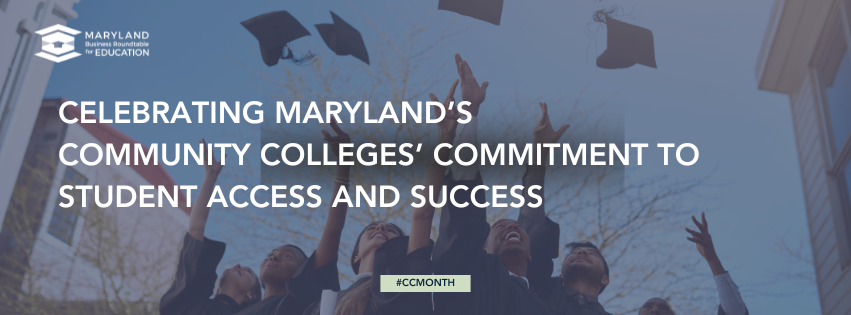
We recognize April as Community College Month and the Maryland Business Roundtable for Education (MBRT) is proud to celebrate the institutions that serve as critical gateways to opportunity for students across the state. With 16 institutions spread over 25+ campuses statewide, Maryland’s community colleges provide affordable, flexible, and workforce-aligned growth, meeting learners where they are and helping them move forward.
Two of those institutions, the College of Southern Maryland (CSM) and the Community College of Baltimore County (CCBC), are led by presidents who also serve on the MBRT Board of Directors, providing governance and valued perspective to statewide conversations about education, access and workforce readiness.
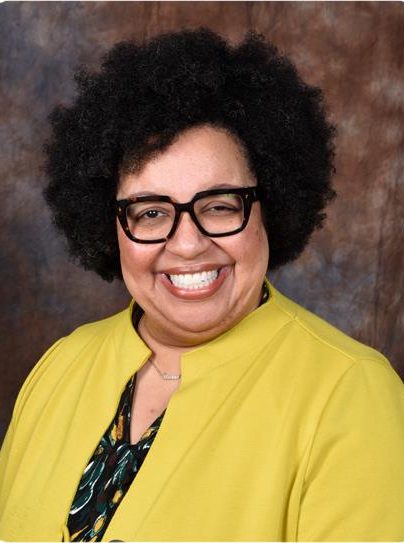
Dr. Yolanda Wilson, President of the College of Southern Maryland, emphasizes that student success is built through collaboration.
“At CSM, we know student success is not something we achieve alone. It takes strong partnerships, shared ideas, and a commitment to working together. That is why we being part of MBRT matters. It gives us the opportunity to stay connected to leaders across education and industry so we can better prepare our students for what is next.”
That collaboration is especially critical now, as Maryland works to align education pathways to the industries that drive Maryland’s economic progress.
“This is a critical time to stay connected to the needs of our state and its workforce,” Dr. Wilson shares. “Through MBRT, we work alongside industry leaders to strengthen pathways, expand access and support the state’s continued growth.”
At CSM, those pathways begin early. Through Early College and dual enrollment programs, students in Calvert, Charles and St. Mary’s counties can begin earning college credit while still in high school, saving time and money while building the skills and confidence to be successful.
“Students who complete these programs are more likely to continue their education, earn degrees more quickly, and improve their long-term outcomes,” Dr. Wilson notes.
At the Community College of Baltimore County, President Sandra L. Kurtinitis, Ph.D., leads an institution serving primarily economically challenged communities, where it is crucial to remove financial barriers.
“Eighty-five percent of CCBC students come from economically challenged areas,” Dr. Kurtinitis points out. “To make college education accessible for all students, CCBC developed a Tuition-Free Program.”
The impact has been transformative. Last year, 93% of CCBC’s 55,000 students were able to attend CCBC fully or partially tuition-free.
“Access barrier removed!” declares Dr. Kurtinitis.

These higher education leaders and the innovative and responsive institutions they represent demonstrate how Maryland’s community colleges are expanding student opportunity through access, affordability, and alignment with industry and workforce needs. Working together, we can ensure that education and the business sector are aligned and support student success statewide.